Sensory discovery / 4 min read
Tasting notes are not an exam.
Floral, fruity, full-bodied… Before searching for the right words, notice what you actually experience.
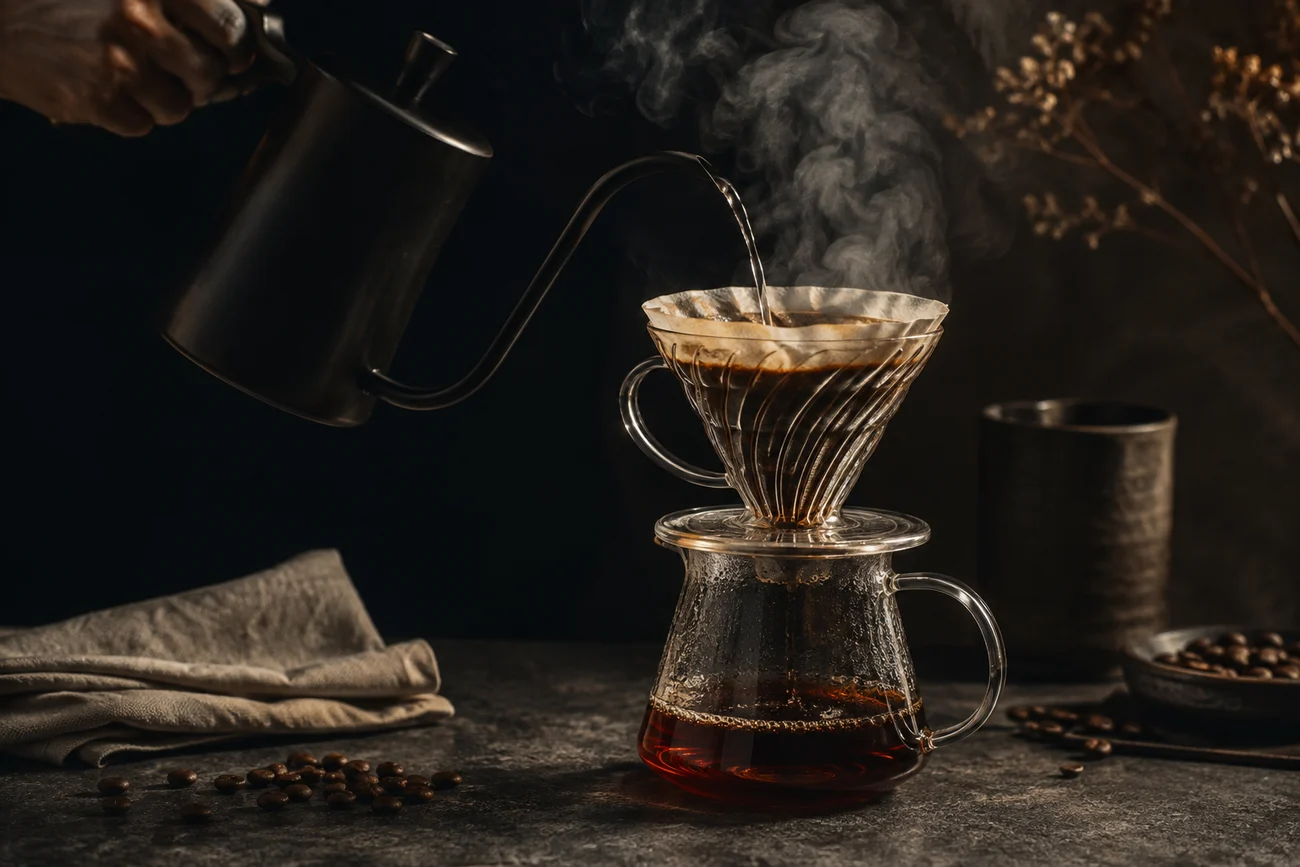
Failing to find a fruit listed on a coffee bag does not mean you are tasting incorrectly. Tasting is an exercise in describing perception with words. At the beginning, ‘lively’, ‘soft’ or ‘roasty’ can be as useful as a detailed aroma name. The aim is not to produce an impressive vocabulary list, but to notice what distinguishes the coffee you are drinking from another cup.
World Coffee Research's sensory lexicon is a research tool for describing coffee attributes through shared references. The idea we can bring into a home tasting is to explain what we mean by the words we use. When you say ‘apple’, are you thinking of a fresh slice or cooked fruit? Describing your association can communicate more than simply naming the aroma.
For a short tasting, prepare two different coffees using the same brewing method and similar serving conditions. Label the cups A and B, and taste before reading the notes on the bags. Write three questions: Which feels livelier? Which has a heavier mouthfeel? Which leaves a longer impression after the sip? You do not need a score sheet or someone who knows the correct answer for this exercise.
Next, try describing aroma, taste and mouthfeel in separate sentences. Short observations might be ‘the smell reminds me of toasted nuts’, ‘the taste makes me think of fruit’ and ‘the texture feels light’. These do not mean those foods were added to the coffee; they are your sensory associations. Put a question mark beside anything uncertain. Keeping that uncertainty is more instructive than erasing your perception to agree with someone else.
As the drink cools to a comfortable tasting temperature, return to the same cup and start another line. Do you still notice the same things? Is one impression easier to name? Add a second observation instead of correcting the first sentence. Your notebook then becomes a record of how your attention changes, rather than a collection of supposedly perfect descriptions.
If you are tasting with a group, ask everyone to write before sharing. Then discuss the words you have in common and the impressions that differ. At the next gathering, try the same pair or choose a new one. Look for progress in how clearly you can describe your preferences and how carefully you set up a comparison, rather than how many aroma names you know.